Vacation vs. Staycation: Is Your Vacation Costing You More?
Oct 25, 2026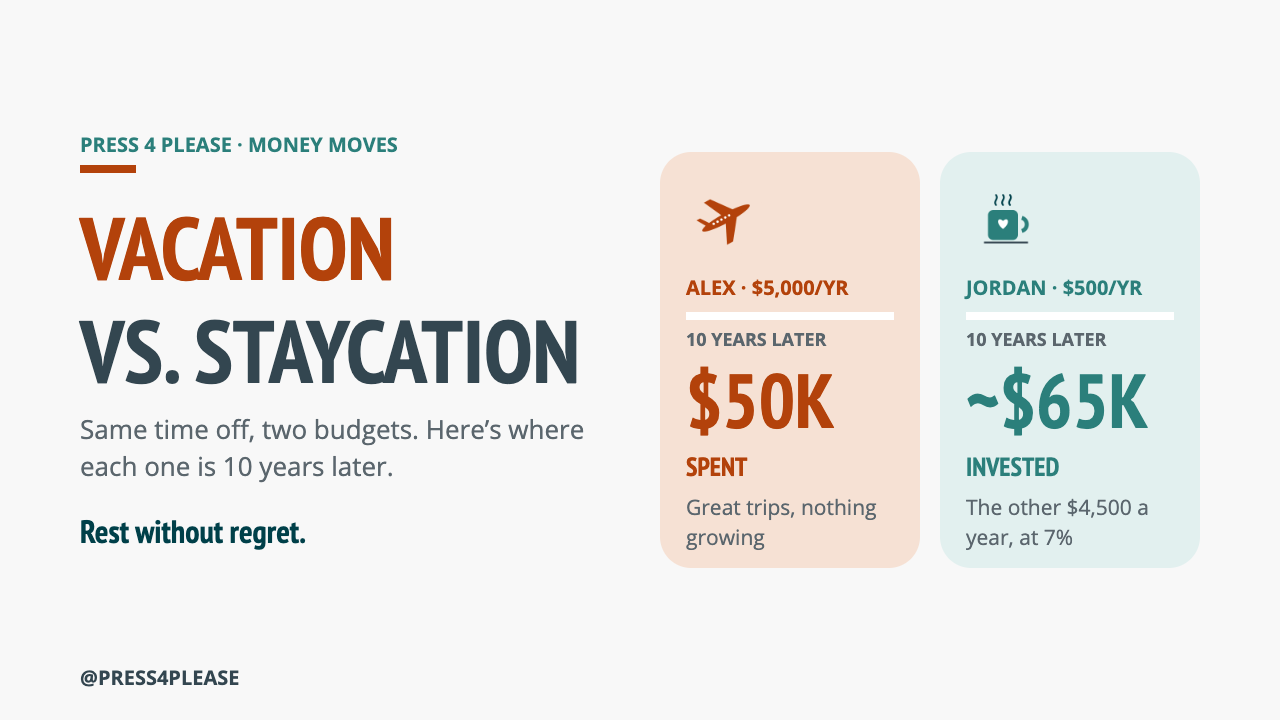
Time off matters. But how much you spend on it can change your future more than you think.
Let's compare two people with the same time off and very different travel budgets.
Meet Alex: a big trip every year
- Flights and top hotels every year
- Fine dining and big experiences
- About $5,000 a year on travel
Meet Jordan: rest and local fun
- Rest, family time and local experiences
- Spends about $500 a year
- Invests the other $4,500 ($375 a month)
10 years later
Alex has spent $50,000: ten amazing trips, and nothing left growing.
Jordan has about $65,000 invested. Jordan put in $45,000, grown at 7% a year, roughly the market's long-run average after inflation.
Both had fun. Only one is still getting paid for it.
You don't have to give up travel
Try the middle ground: one big trip every other year, with local getaways in between. That's about $2,500 a year on travel. Invest the other $2,500 a year and you'd have about $36,000 in 10 years.
Travel more for less
- Book off-season, when flights and hotels cost less.
- Use credit card points or miles, as long as you pay the balance in full.
- Pay in cash so the trip doesn't follow you home on a statement.
Rest without regret
- Set a yearly travel budget.
- Save for trips ahead of time, in cash.
- Mix big trips with local getaways.
- Invest what you don't spend.
The takeaway
The best trip is the one you've already paid for.
Want a simple place to start? Grab our free zero-based budget template, and follow @press4please for more simple money lessons.
Hypothetical example at a 7% annual return. Returns are not guaranteed. This article is for general information only and isn't financial advice.
Want a head start?
Grab the free zero-based budget spreadsheet: give every dollar a job before the month starts.