The 6 Phases of Financial Security: Which One Are You In?
Oct 20, 2026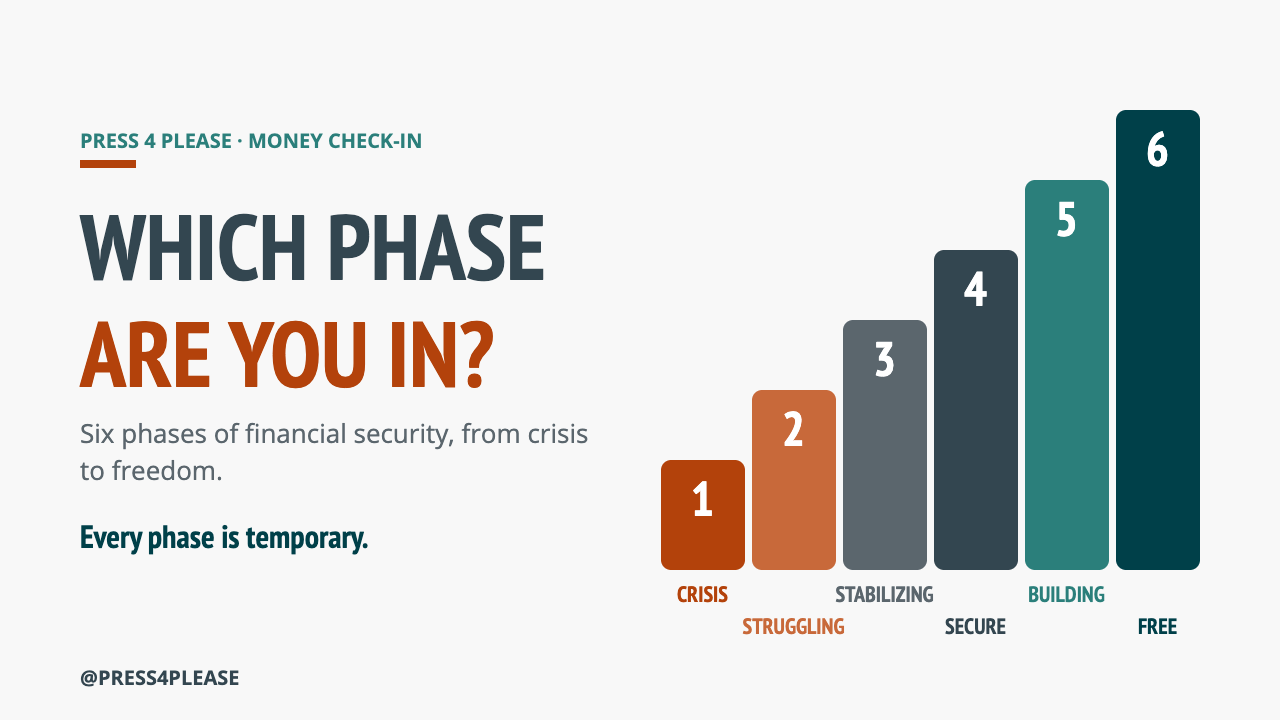
Money stress feels different depending on where you are. Someone dodging collection calls and someone deciding where to invest are dealing with very different problems.
That's why it helps to name your phase. Once you know where you are, the next step gets a lot clearer. No judgment. Every phase is temporary.
The danger zone: money controls you
Phase 1: Crisis. Debt collectors are calling, you're behind on rent or your mortgage, and overdrafts are constant.
Your next step: Cover housing, food and utilities first. Then call your creditors and ask about hardship plans. Many will work with you if you reach out.
Phase 2: Struggling. You're living paycheck to paycheck, juggling which bills to pay, and credit card debt keeps growing.
Your next step: List every bill and its due date. Build a $500 to $1,000 starter emergency fund so one surprise doesn't become a crisis.
The steady zone: you're in control
Phase 3: Stabilizing. You're on a budget that works, you have a small emergency fund, and your debt is going down, not up.
Your next step: Attack high-interest debt first. Automate a little savings every payday.
Phase 4: Secure. You have 3 to 6 months of expenses saved, you save every month, and you have little or no consumer debt.
Your next step: Get any 401(k) match your employer offers, then start investing for the long term.
The growth zone: your money works for you
Phase 5: Building. You invest consistently, have more than one income stream and spread your money across different accounts.
Your next step: Keep investing on autopilot and grow a second income stream.
Phase 6: Free. Passive income covers your bills. You have a high net worth and you're thinking about giving and legacy.
Your next step: Protect what you built with an estate plan, the right insurance and a giving plan.
How to move up, one phase at a time
- Name your phase honestly.
- Pick the one next step for that phase. Just one.
- Automate it so it happens without willpower.
- Check in once a month, and again in six months.
The takeaway
You're not stuck. You're at a starting point. Small, steady moves get you to the next phase.
Want a simple place to start? Grab our free zero-based budget template, and follow @press4please for more simple money lessons.
For general information only, not professional financial advice.
Want a head start?
Grab the free zero-based budget spreadsheet: give every dollar a job before the month starts.