How to Pay a Credit Card: The 2 Dates That Decide Your Interest and Credit Score
Nov 01, 2026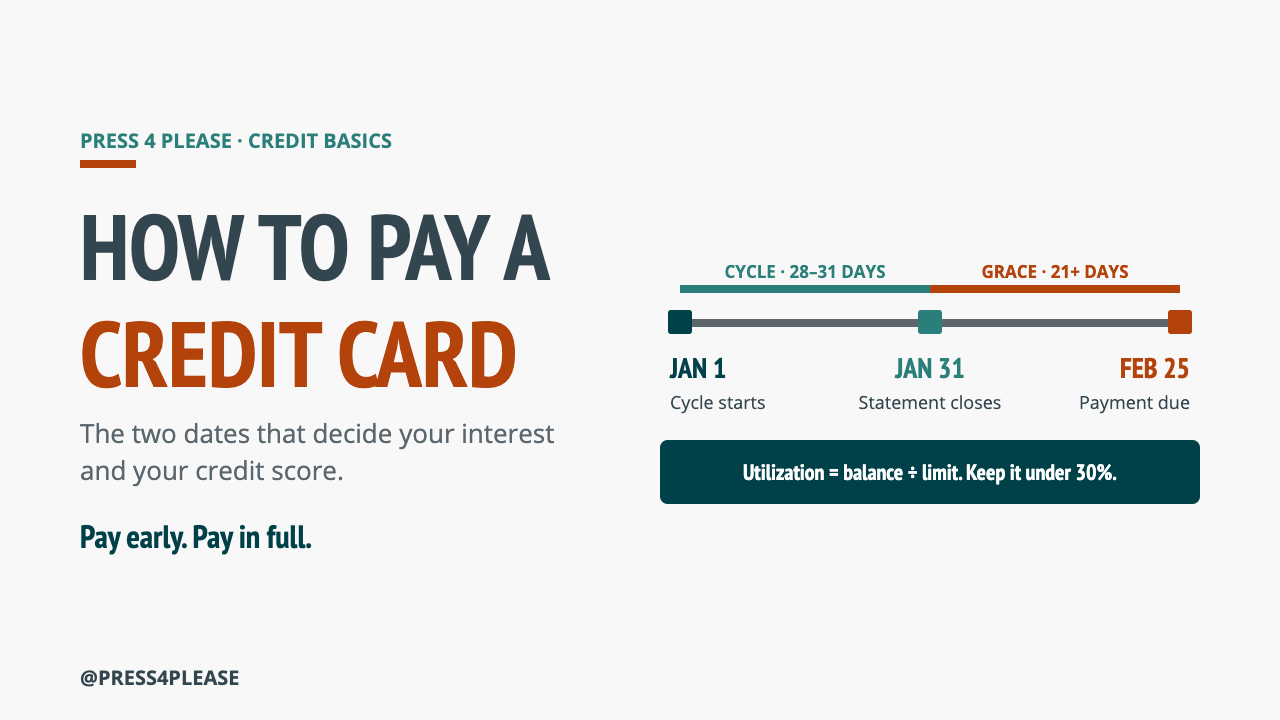
Most people think paying a credit card is simple: pay the bill before it's due. But two dates on your statement quietly decide how much interest you pay and what the credit bureaus see. Once you know them, you can protect both your wallet and your score.
The timeline, step by step
- The billing cycle (28 to 31 days): every purchase you make during this window lands on the same statement.
- The statement closing date: the last day of the cycle. Your balance on this day becomes your statement balance, and it's usually what your card issuer reports to the credit bureaus.
- The payment due date: by law, at least 21 days after your statement is sent. This stretch is your grace period.
Example: a cycle runs Jan 1 to Jan 31. The statement closes Jan 31. The payment is due around Feb 25.
Date #1: the statement closing date
- The balance on this day is usually the one your credit report shows.
- Pay some or all of your balance before this date and a lower balance gets reported.
- A lower reported balance means lower credit utilization, which can help your score.
Some issuers report on a different day, so check with yours if you're timing it closely.
Date #2: the payment due date
- Pay the full statement balance by this date and you owe no interest on those purchases.
- Pay only the minimum and you avoid a late fee, but interest kicks in on the rest. The average card APR is about 22% (Federal Reserve, August 2026).
- Miss the due date and you'll likely owe a late fee. Once a payment is 30 or more days late, it can show up on your credit report.
Credit utilization, explained
Utilization = balance ÷ credit limit × 100
If you owe $1,000 on a card with a $5,000 limit, your utilization is 20%.
- Under 30%: a common rule of thumb
- Under 10%: where the highest credit scores tend to be
- 30% or more: can pull your score down
Amounts owed make up about 30% of a FICO score, second only to payment history.
The 2-payment method
- Pay before the statement closes. This lowers the balance the credit bureaus see.
- Pay the rest by the due date. Pay the full statement balance and you owe no interest.
- Turn on autopay as a backup. Set it to the statement balance, not the minimum, so you never miss a due date.
Mistakes to avoid
- Paying only the minimum: at about 22% APR, interest piles up fast.
- Paying after the due date: late fees, and possible damage to your credit if it's 30+ days late.
- Carrying a balance "to build credit": you don't need to pay interest to build credit. Using the card and paying in full works.
- Closing your oldest card: it can lower your total limit and raise your utilization.
The takeaway
Pay early. Pay in full. Find your statement closing date and due date on your next statement, and put both in your calendar today.
Follow @press4please for more simple money lessons.
Average card APR: Federal Reserve G.19, accounts assessed interest, August 2026. Dates in the example are for illustration. Reporting dates and card terms vary by issuer. This article is for general information only and isn't financial advice.
Want a head start?
Grab the free zero-based budget spreadsheet: give every dollar a job before the month starts.